Category Archives: Ἄσκήσεις

Ἄσκησις περὶ Ἅβραμ ἐν Αἰγύπτῳ

αἱ ὁδηγίαι

ἐν τᾠ σῷ βιβλίῳ τέλει τὰς ἑπομένας ἁμίλλας (“assignments”). εἶτα φωτόγραφε τὸ ἔργον καὶ ἐπίστελλε ἐμοὶ τὴν φωτογραφίαν διὰ ἠλεκτρονικοῦ ταχυδρόμου ἢ μνήματος κείμενου.

ἡ πρώτη ἅμιλλα· προστίθει (“add”) πρὸς τὸν γεωγραφικὸν πίνακα τὴν τοῦ Ἅβραμ ὁδὸν εἰς Αἴγυπτον ὑποδείκνυς τοὺς τόπους καὶ τὰ ὀνόματα τοῦ Νείλου ποταμοῦ καὶ τὴν Μέμφιν πόλιν.

ἡ δευτέρα ἅμιλλα· ἀποκρίνου τὰ ἑπόμενα ἐρωτήματα.

τὸ πρῶτον ἐρώτημα· ἆρα ἡ γυνὴ ἡ τοῦ Ἅβραμ καλή ἐστι τὸ πρόσωπον;

τὸ δεύτερον ἐρώτημα· τί κτᾶται ὁ Ἅβραμ ἐν Αἰγύτῳ;

τὸ τρίτον ἐρώτημα· τί ποιεῖ ὁ Φαραώ;

Ἄσκησις περὶ τῆς κατοικήσεως ἐν Βαιθήλ

αἱ ὁδηγίαι

ἐν τᾠ σῷ βιβλίῳ τέλει τὰς ἑπομένας ἁμίλλας (“assignments”). εἶτα φωτογράφετε τὸ ἔργον καὶ ἐπιστέλλετε ἐμοὶ τὴν φωτογραφίαν διὰ ἠλεκτρονικοῦ ταχυδρόμου ἢ μνήματος κείμενου.

ἡ πρώτη ἅμιλλα· προστίθει (“add”) πρὸς τὸν σὸν πίνακα τὴν τοῦ Ἅβραμ ὁδὸν εἰς γῆν Χαναὰν ὑποδείκνυς τοὺς τόπους καὶ τὰ ὀνόματα τῶν Συχὲμ καὶ Βαιθήλ.

ἡ δευτέρα ἅμιλλα· ἀποκρίνου τὰ ἑπόμενα ἐρωτήματα.

τὸ πρῶτον ἐρώτημα· τίς πορεύεται μετὰ τοῦ Ἅβραμ ἐκ Χαρράν;

τὸ δεύτερον ἐρώτημα· ποῦ θυσιαστήριον οἰκοδομεῖ ὁ Ἅβραμ;

τὸ τρίτον ἐρώτημα· ἐν ποίῳ οἴκῳ οἰκεῖ ὁ Ἅβραμ;

Ἄσκησις περὶ τῶν προγόνων τοῦ Ζαφόνος

Instructions

τέλει τὰ ἑπόμενα ἔργα (“complete the following tasks”). εἶτα φωτογράφετε τὸ ἔργον καὶ ἐπιστέλλετε ἐμοὶ τὴν φωτογραφίαν διὰ ἠλεκτρονικοῦ ταχυδρόμου ἢ μνήματος κείμενου.

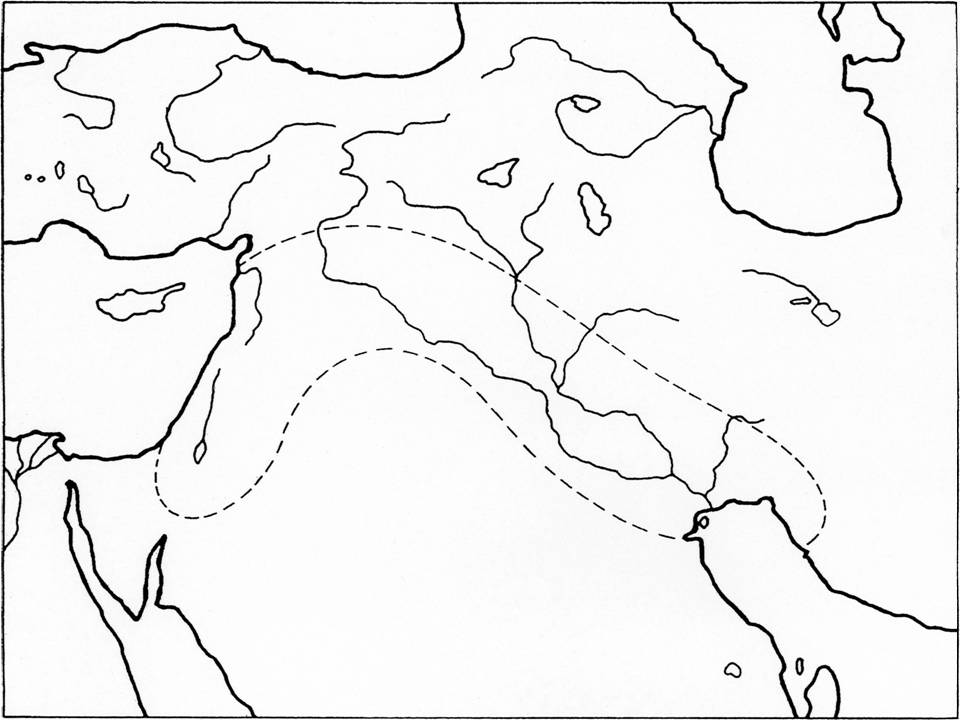
τὸ πρῶτον ἔργον· ἐκτύπου τόνδε τὸν πίνακα (“print out the following map”) καὶ ἐπὶ τοῦ πινάκου ὀνόμαζε τὸν ποταμὸν Τίγρητα καὶ τὸν ποταμὸν Εὐφρήτην καὶ τὸν ποταμὸν Ἰορδάνην καὶ ὑποδείκνυ (“indicate” or “mark”) τὴν πόλιν Οὔρ καὶ τὴν μετοικίαν (“migration”) τῆς οἰκίας τοῦ Ἅβραμ.

blank_map

τὸ δεύτερον ἔργον· γράφε τὸ δένδρον τῆς συγγενείας τῆς οἰκίας τοῦ Θαρα ὀνομάζων τοὺς πατέρας καὶ τὰς μητέρας καὶ τὰς θυγατέρας καὶ τοὺς ὑίους.

τὸ τρίτον ἔργον· συμπλήρει τὰ κανὰ (“fill the blanks”) ἐν τῷ διαγράμματι.

ἀριθμός τὸ πρόσωπον ὁ μέλλων χρόνος τοῦ ποιέω ὁ μέλλων χρόνος τοῦ μεγαλύνω ὁ μέλλων χρόνος τοῦ καταράομαι
ἑνικός πρῶτον (ἐγώ)
δεύτερον (σύ)  μεγαλυνεῖς
τρίτον (μαθητής) ποιήσει
πληθυνικός πρῶτον (ἡμεῖς)
δεύτερον (ὑμεῖς) καταράσεσθε
τρίτον (μαθηταί)

Ἄσκησις τρίτη

Instructions

For this ἄσκησις you will draw and label a plan of your “ancestral” οἰκία in your notebook and try adapting Kydraios’ descriptions to fit your living situation. If your “ancestral” οἰκία consists of more than one floor, just draw a plan of the ground floor. Here are some additional notes about conducting your guest through your house:

For now limit the number of verbs to the three that appear in the first reading assignment:

βαδίζω (“I walk”)

τρέπω (“I turn”)

ὁρῶ (ὁράω) (“I see”)

Note: when you use τρέπω, you will use the middle voice. For example, “I turn (myself)” is τρέπομαι; “we turn (ourselves)” is τρεπόμεθα. As we discussed in class, we can change τρεπόμεθα (the indicative) to “let us turn ourselves” (i.e., use the subjunctive mood) by lengthening the thematic vowel: τρεπώμεθα.

Here are some of the adverbs and prepositional phrases you might want to use:

ἐξ ἀριστερᾶς (χειρός) (“to the left”) when referring to something that is on the left side (of something else)

ἐξ δεξιᾶς (χειρός) (“to the right”) when referring to something that is on the right side (of something else)

ἐπ’ ἀριστεράν (χεῖρα) (“to the left”) when you are moving to the left

ἐπ’ δεξιάν (χεῖρα) (“to the right”) when you are moving to the right

ἔμπροσθεν (“before,” “in front,” “forwards”)

ὄπισθεν (“behind,” “in back,” “backwards”)

As we discussed in class, we typically have more rooms in our houses and rooms for specialized purposes beyond those in the ancient world. We will, however, apply some of the words that appear in ancient Greek texts to our modern situations:

For “dining room” use συσσίτιον, συσσιτίου, n. (oud., i.e., οὐδέτερον), which referred to the common mess halls in Sparta and Crete.

For “front room” or “living room use “ξενών, ξενῶνος, m. (αρσ., i.e., ἀρσενικόν), which means “guest quarters.”

For “family room” or “television room” use δόμος, δόμου, m. (αρσ., i.e., ἀρσενικόν), which can refer to the entire house but also describes a room or chamber. We read, for example, that this was the room where Telemachus welcomed Athena in the guise of Mentes to his οἷκος:

“χαῖρε, ξεῖνε, παρ᾽ ἄμμι φιλήσεαι· αὐτὰρ ἔπειτα
δείπνου πασσάμενος μυθήσεαι ὅττεό σε χρή.”
ὣς εἰπὼν ἡγεῖθ᾽, ἡ δ᾽ ἕσπετο Παλλὰς Ἀθήνη.
οἱ δ᾽ ὅτε δή ῥ᾽ ἔντοσθεν ἔσαν δόμου ὑψηλοῖο,
ἔγχος μέν ῥ᾽ ἔστησε φέρων πρὸς κίονα μακρὴν
δουροδόκης ἔντοσθεν ἐυξόου, ἔνθα περ ἄλλα
ἔγχε᾽ Ὀδυσσῆος ταλασίφρονος ἵστατο πολλά,
αὐτὴν δ᾽ ἐς θρόνον εἷσεν ἄγων, ὑπὸ λῖτα πετάσσας,
καλὸν δαιδάλεον· ὑπὸ δὲ θρῆνυς ποσὶν ἦεν.

Greetings, Guest, you are welcome with us, and when
you have eaten dinner tell us what you need.
Having spoken, he led and Pallas Athena followed.
When they were inside the high-roofed chamber,
taking her spear to the great pillar he
stood it in the polished spear stand,
where steady-minded Odysseus used to place his many spears,
and leading on seated her on a chair having spread
over it a beautiful, smooth, embroidered
coverlet. Beneath her feet was a footstool.

In this room Phemios, the singer, entertained the suitors:

κῆρυξ δ᾽ ἐν χερσὶν κίθαριν περικαλλέα θῆκεν
Φημίῳ, ὅς ῥ᾽ ἤειδε παρὰ μνηστῆρσιν ἀνάγκῃ
ἦ τοι ὁ φορμίζων ἀνεβάλλετο καλὸν ἀείδειν.

And the footman placed the cithara in Phemios’ hands
who by compulsion sang for the suitors.
Strumming the stings he struck up a beautiful song.

You also have the words for objects inside your οἰκήματα:

δίφρος, -ου or θρόνος, -ου (“chair”)

τράπεζα, -ης (“table”)

κλίνη, -ης (“bed”)

βιβλιοθήκη, -ης (“bookcase”)

When you have drawn your plan, labeled the rooms and their contents (for some at least), and taken a friend (φίλη or φίλος) through your οἰκία, take a picture of your work and send it to me as an attachment to a text message or email.
Ἄσκησις δευτέρα

Instructions

This ἄσκησις has two parts. The first (τὸ πρῶτον μέρος) begins with a series of questions (ἐρωτήματα) and answers (ἀποκρίσεις). Write out the answers and, if applicable, complete the sentences. So, for example, in response to the first question “τί ἐστι τὸ ὄνομα σοί (“What is your name?” or more literally “What is the name to you?”), write out the answer “τὸ ὄνομα ἐμοί ἐστι” and complete the sentence with your name, which you chose for last exercise. The last set of sentences concern your siblings. Write out and complete, if applicable, those answers that apply in your situation. For the second part (τὸ δεύτερον μέρος) draw and label a map of your οἰκία in your notebook and try adapting Kydraios’ description of his οἰκία to fit your living situation. If you are away at school, you may use either your current living arrangement or describe your “ancestral” οἰκία.
After you have written out and completed the sentences in your notebook and drawn and labeled the floor plan of your οἰκία, take a picture of your work (one that is legible, so I can see your responses) and send it to me as an attachment to an email message to kennymorrell@gmail.com or to a text message to (202) 257-6269.

ἐρώτημα·

τί ἐστι τὸ ὄνομα σοί;

ἀπόκρισις·

τὸ ὄνομα μοί ἐστι _____________

ἐρώτημα

τί ἐστι τὸ ὄνομα τῷ πατρί;

ἀπόκρισις·

τὸ ὄνομα τῷ πατρί ἐστι _____________

ἐρώτημα

τί ἐστι τὸ ὄνομα τῇ μητρί;

ἀπόκρισις·

τὸ ὄνομα τῇ μητρί ἐστι _____________

ἐρώτημα

ἆρά ἐστι σοὶ ἀδελφὸς ἢ ἀδελφή;

ἀπόκρισις·

οὔκ ἐστι μοὶ ἀδελφὸς ἢ ἀδελφή.
ἔστι ἐμοὶ ἀδελφὸς καὶ τὸ ὄνομα αὐτῷ ἐστὶ ________________
ἔστι ἐμοὶ ἀδελφὴ καὶ τὸ ὄνομα αὐτῇ ἐστὶ ________________
εἴσι ἐμοὶ δύο ἀδελφαὶ καὶ τὰ ὀνόματα αὐταῖς ἐστὶ ________________ καὶ _________________
εἴσι ἐμοὶ δύο ἀδελφοὶ καὶ τὰ ὀνόματα αὐτοῖς ἐστὶ ________________ καὶ _________________

Ἄσκησις πρώτη

Instructions

Work through the following text, which is an excerpt from Hesiod’s Theogony 347-361. What is different about the names as they appear in the lines compared to their forms in the two lists? Pick a name you would like to use this year in class and be prepared to say something about that name and why you picked it.

Ὠκεανῷ [to Oceanus] Τηθὺς [Tēthus] ἔτεκε [bore (i.e., gave birth to)] Ποταμοὺς [Rivers] δινήεντας [whirling]:

Νεῖλόν τ᾽ Ἀλφειόν τε καὶ Ἠριδανὸν
Στρυμόνα Μαίανδρόν τε καὶ Ἴστρον
Φᾶσίν τε Ῥῆσόν τ᾽ Ἀχελώιόν τ᾽
Νέσσον τε Ῥοδίον θ᾽ Ἁλιάκμονά θ᾽ Ἑπτάπορόν τε
Γρήνικόν τε καὶ Αἴσηπόν τε Σιμοῦντα
Πηνειόν τε καὶ Ἕρμον τε Κάικον
Σαγγάριόν τε Λάδωνά τε Παρθένιόν τε
Εὔηνόν τε καὶ Ἄρδησκόν τε Σκάμανδρον.

Νεῖλος [Neílos]
Ἀλφειός [Alpheiós]
Ἠριδανός [Eridanós]
Στρυμών [Strumōn]
Μαίανδρος [Maíandros]
Ἴστρος [Hístros]
Φᾶσις [Phāsis]
Ῥῆσος [Rhēsos]
Ἀχελώιος [Akhelōios]
Νέσσος [Néssos]
Ῥοδίος [Rhodíos]
Ἁλιάκμων [Aliákmōn]
Ἑπτάπορος [Heptáporos]
Γρήνικος [Grēnikos]
Αἴσηπος [Aísēpos]
Σιμόεις [Simóeis]
Πηνειός [Pēneiós]
Ἕρμος [Hérmos]
Κάικος [Káikos]
Σαγγάριος [Sangários]
Λάδων [Ládōn]
Παρθένιος [Parthénios]
Εὔηνος [Eúēnos]
Ἄρδησκος [Árdēskos]
Σκάμανδρος [Skámandros]

Ὠκεανῷ [to Oceanus] Τηθὺς [Tēthus] ἔτεκε [bore (i.e., gave birth to)] ἱερὸν [holy] γένος [race] θυγατέρων [of daughters]·

Πειθώ τ᾽ Ἀδμήτην τε Ἰάνθην τ᾽ Ἠλέκτρην τε
Δωρίδα τε Πρυμνώ τε καὶ Οὐρανίην
Ἱππώ τε Κλυμένην τε Ῥόδειάν τε Καλλιρόην τε
Ζευξώ τε Κλυτίην τε Ἰδυῖάν τε Πασιθόην τε
Πληξαύρην τε Γαλαξαύρην τε Διώνην
Μηλοβόσιδὰ τε Φόην τε καὶ Πολυδώρην
Κερκηίδα τε Πλουτώ
Περσηίδα τ᾽ Ἰάνειράν τ᾽ Ἀκάστην τε Ξάνθην τε
Πετραίην τε Μενεσθώ τ᾽ Εὐρώπην τε
Μῆτίν τ᾽ Εὐρυνόμην τε Τελεστώ τε Κροκοπεπλον
Χρυσηίδα τ᾽ Ἀσίην τε καὶ Καλυψὼ
Εὐδώρην τε Τύχην τε καὶ Ἀμφιρὼ Ὠκυρόην τε
καὶ Στύγα

Πειθώ [Peithō]
Ἀδμήτη [Admétē]
Ἰάνθη [Iánthē]
Ἠλέκτρη [Eléktrē]
Δωρίς [Dōris]
Πρυμνώ [Prymnō]
Οὐρανίη [Oúraniē]
Ἱππώ [Hippō]
Κλυμένη [Kluménē]
Ῥόδεια [Rhódeia]
Καλλιρόη [Kalliróē]
Ζευξώ [Zeuksō]
Κλυτίη [Klutíē]
Ἰδυῖά [Iduía]
Πασιθόη [Pasithóē]
Πληξαύρη [Plēksaúrē]
Γαλαξαύρη [Galaksaúrē]
Διώνη [Diōnē]
Μηλόβοσίς [Mēlóbosis]
Φόη [Thóē]
Πολυδώρη [Polydōrē]
Κερκηίς [Kekrēís]
Πλουτώ [Ploutō]
Περσηίς [Persēís]
Ἰάνειρα [Iáneira]
Ἀκάστη [Akáskē]
Ξάνθη [Ksánthē]
Πετραίη [Petraíē]
Μενεσθώ [Menesthō]
Εὐρώπη [Eurōpē]
Μῆτις [Mētis]
Εὐρυνόμη [Eurynómē]
Τελεστώ [Telestō]
Κροκόπεπλος [Krokópeplos]
Χρυσηίς [Khpysēís]
Ἀσίη [Asíē]
Καλυψὼ [Kalypsō]
Εὐδώρη [Eudórē]
Τύχη [Týkhē]
Ἀμφιρὼ [Amphirē]
Ὠκυρόη [Ōkyróē]
Στύξ [Stýks]

G101.A.01